Strategic Horizon 2026–2034 • Milestones
National Cassava Industrialisation Roadmap
Execution milestones to transform smallholder yields, scale domestic starch & HQCF milling, and achieve circular bio-economy self-sufficiency.
Filter Phase:
National Cassava Roadmap Execution Index
Phase 1 (2026–2027) in progress (42% Completed)
Currently active: Foundation stem multiplication with IITA, onboarding outgrower farmer cooperatives, and deploying tractor mechanization hubs.
Phase 1: 2026–2027
85% Executed
Clean Stem Multiplication & SAPZ Aggregation Hubs
- Multiplication of certified CMD-resistant, high-starch breeder stems (TME 419 & Yellow Vitamin A) with IITA and NRCRI.
- Establishment of Special Agro-Processing Zones (SAPZ) in Oyo, Ogun, Benue, and Cross River states with tax exemptions.
- Launch of CassavaConnect digital registry and B2B Deal-Room for 12 key value chain stakeholder categories.
Phase 2: 2027–2028
48% In Progress
Solar Flash Drying Networks & 10% Wheat Substitution
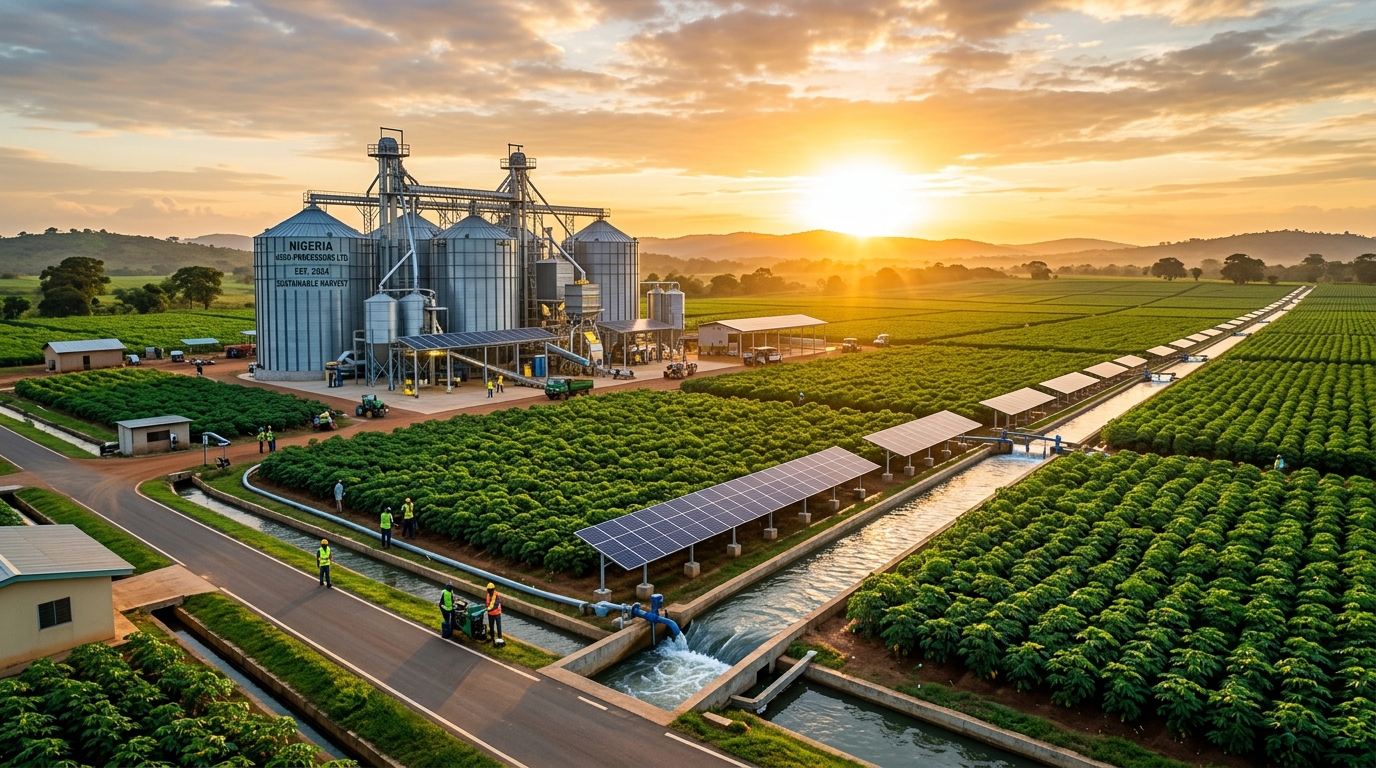
- Rollout of 50+ decentralized solar-thermal continuous flash drying units in major cassava producing clusters.
- Enforcement of the Federal 10% High Quality Cassava Flour (HQCF) wheat flour substitution mandate for commercial bakeries.
- Bank of Agriculture and NIRSAL single-digit interest credit facility for outgrower tractor ridger & harvester leasing.
Phase 3: 2028–2030
22% Pipeline
Rapid CNG Corridors & Industrial Bio-Ethanol Blending
- Conversion of heavy-duty fresh root haulage fleets to dual-fuel CNG, ensuring sub-24h delivery to processing mills.
- Expansion of commercial distillation capacity for 96% Extra Neutral Alcohol (ENA) and implementation of national E10 bio-fuel blending.
- Digital Cassava Product Passport QR tracking verifying NAFDAC food safety and non-cyanide compliance.
Phase 4: 2030–2034
Planned Horizon
100% Industrial Starch Self-Sufficiency & Bioplastics
- Achieving 100% domestic substitution of imported industrial food-grade and pharmaceutical native/modified starch ($600M annual FX savings).
- Zero-waste cassava peel upcycling into high-protein animal feed pellets across all 36 states.
- Commercial manufacturing of biodegradable cassava starch thermoplastic bioplastics (TPS) for eco-packaging.